Context
PowerFinance was building a digital-first banking platform powered by blockchain infrastructure. Customers could open accounts, manage assets, and interact with financial products that relied on smart contract technology.
While the underlying technology was innovative, the onboarding experience had grown overly complex. Regulatory requirements such as KYC (Know Your Customer) verification, identity checks, and compliance confirmations had been layered onto the flow over time, resulting in a long and fragmented journey.
At the start of the project, onboarding consisted of over 100 screens and multiple verification steps, creating confusion and high abandonment rates among new users.
The goal was to redesign the onboarding experience to feel faster, clearer, and more trustworthy, without compromising strict regulatory requirements.
The Problem
Analytics and customer feedback revealed several critical issues.
Users often abandoned onboarding because they:
• didn’t understand why certain personal information was required
• encountered confusing document upload instructions
• lost track of how much progress they had made
• experienced uncertainty during identity verification checks
Many users also assumed the process would take much longer than it actually did, simply because the interface felt heavy and fragmented.
The challenge was not just to reduce friction, but also to reduce perceived effort and build trust in the process.
Discovery
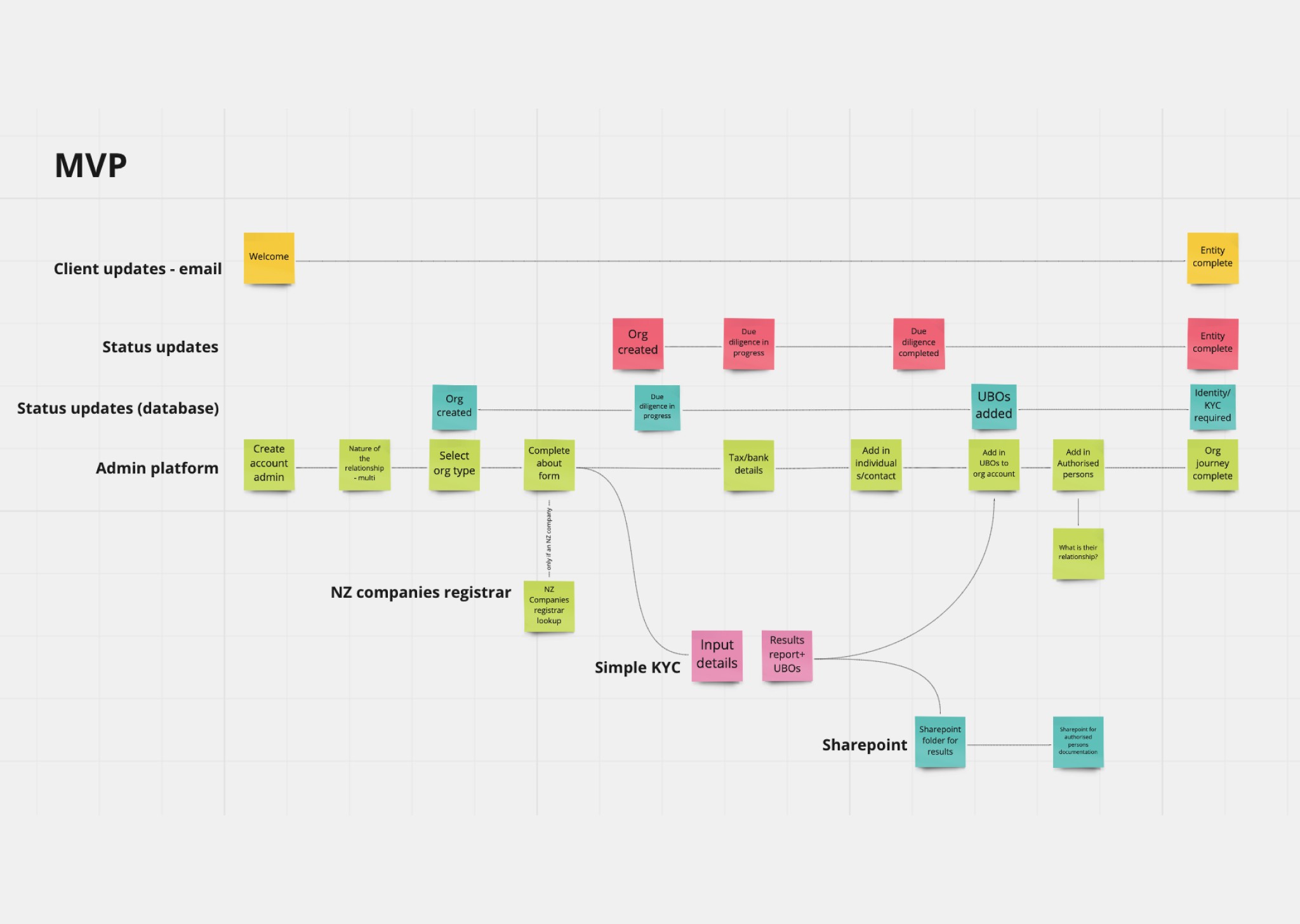
I began with a full journey mapping exercise, mapping every screen and interaction involved in onboarding. This helped visualise the entire experience and identify where users were encountering friction. Several research activities supported this process:
Behaviour Analytics
Using product analytics tools, I identified the highest drop-off points in the journey.
The largest abandonment spikes occurred during:
• identity document uploads
• address verification
• compliance confirmations
Customer Interviews
I spoke with recent customers who had completed — or abandoned — onboarding.
Common feedback included:
“I wasn’t sure if I’d done something wrong.”
“I didn’t know how many steps were left.”
“Some instructions felt like legal language rather than something meant for customers.”
These insights highlighted the importance of clarity, reassurance, and visible progress.
Support Team Insights
Support teams shared common onboarding questions they received from users, including:
• “What type of ID should I upload?”
• “Why do you need my address verification?”
• “Is my account already created?”
These questions revealed gaps in communication within the flow.

Design Hypothesis
I formed a core hypothesis for the redesign:
If onboarding was broken into clear, guided stages with visible progress, users would feel more confident completing the process. Instead of presenting onboarding as a long sequence of forms, the experience could be reframed as a step-by-step setup journey.
The design would focus on:
• reducing cognitive load
• clarifying compliance requirements
• providing reassurance at key moments
Exploration
Several structural approaches were explored before finalising the solution.
Direction 1 — Long Form Approach
All onboarding information presented across several long form pages.
This reduced navigation steps but felt overwhelming, particularly on mobile devices.
Direction 2 — Wizard-Based Flow
A traditional step-by-step wizard with multiple small pages.
This improved clarity but still felt slow due to the large number of screens required.
Direction 3 — Progressive Onboarding (Chosen Direction)
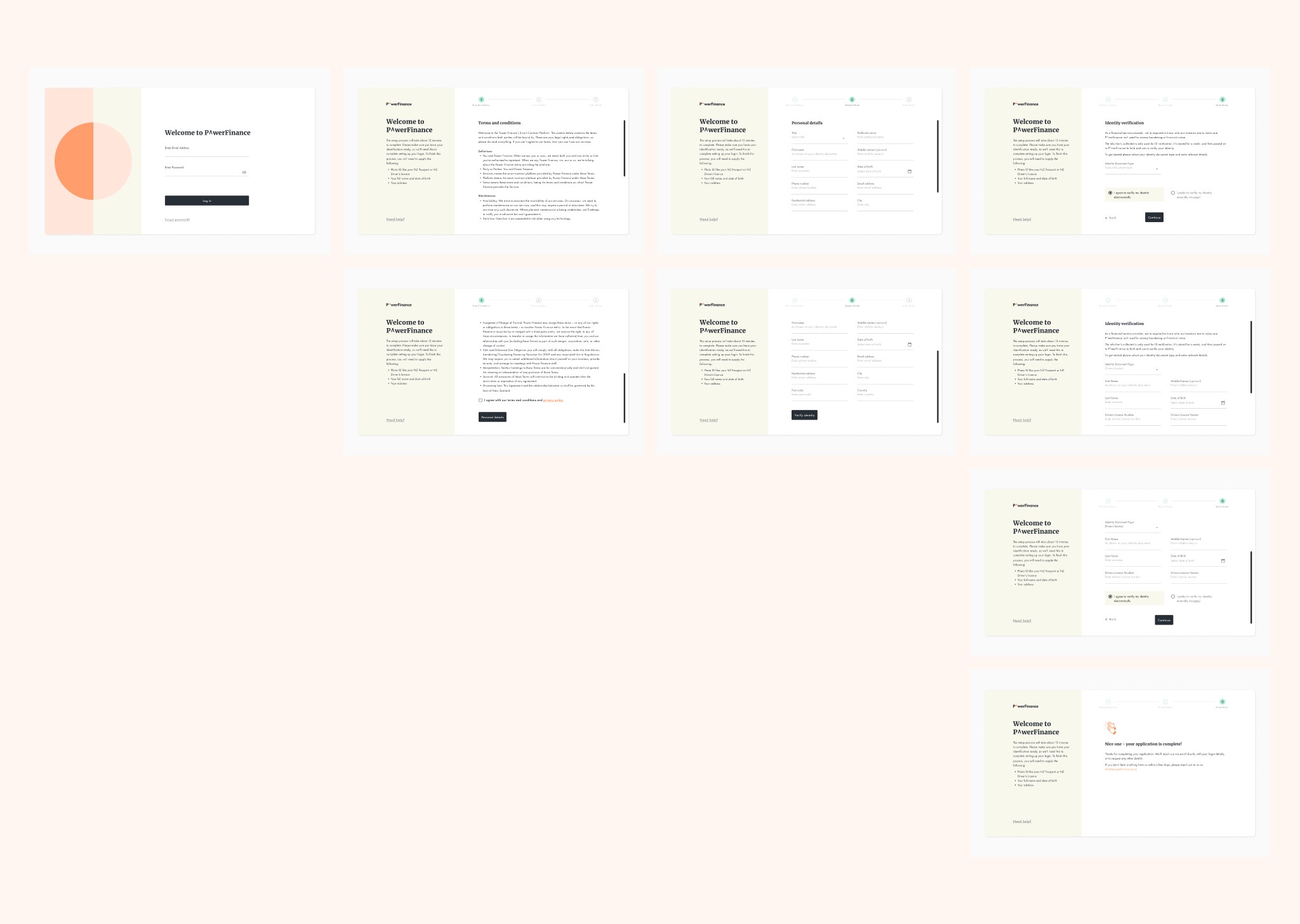
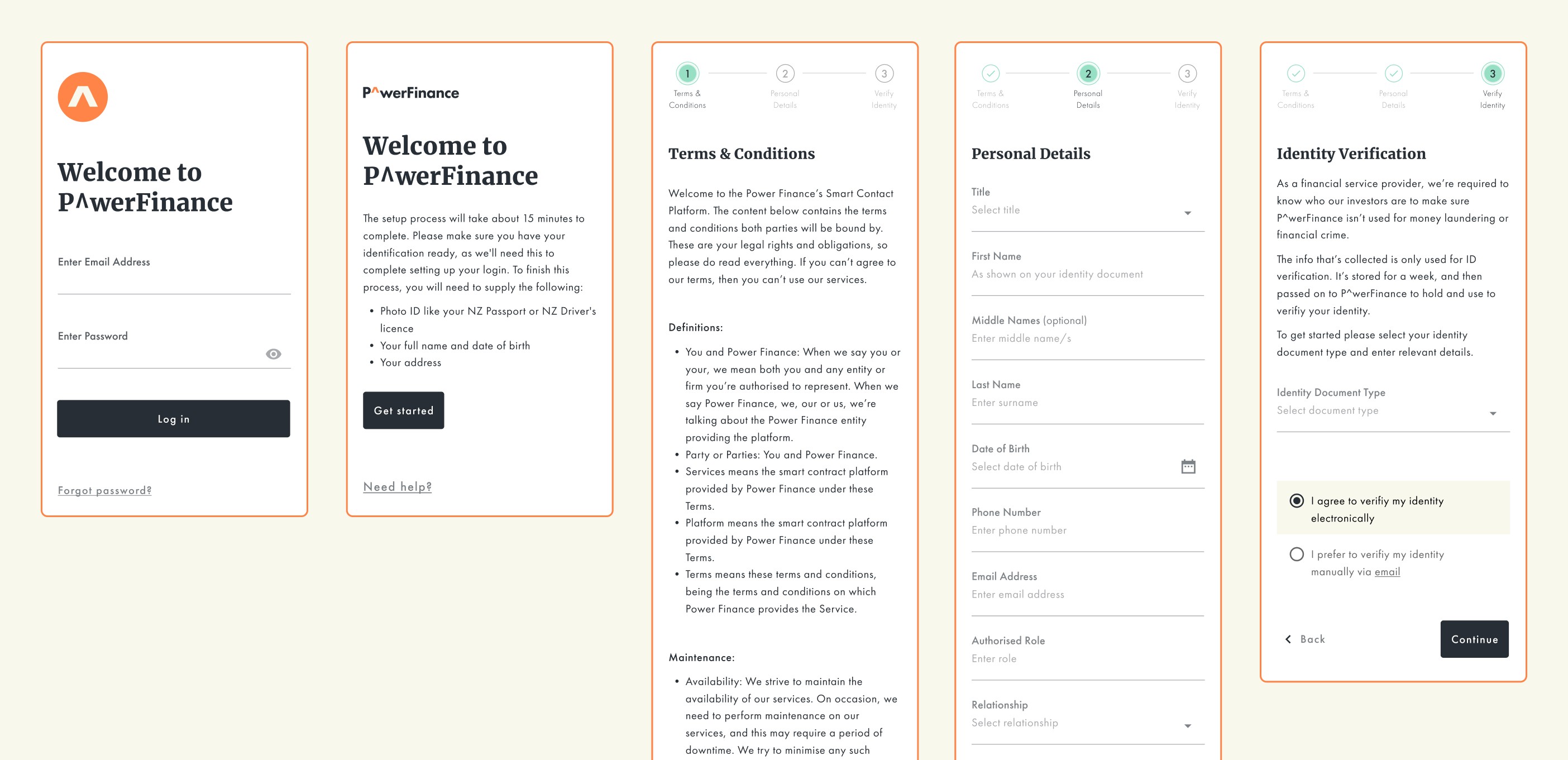
The final approach grouped related tasks into clear onboarding stages, such as:
• Personal details
• Identity verification
• Security setup
• Account confirmation
Each stage contained a small number of steps and displayed clear progress indicators.
This structure helped users understand where they were and what remained.
AI-Assisted Workflow
AI was primarily used to accelerate UX writing exploration.
Using prompt-based workflows, I generated alternative phrasing for:
identity verification instructions
form validation messages
regulatory explanations
These drafts were refined and tested with users to ensure clarity.
Edge Cases & Internal Testing
Given the regulatory nature of the platform, extensive testing focused on edge cases.
These included scenarios such as:
• blurry or unreadable identity documents
• mismatched personal information
• slow network conditions during uploads
• users abandoning and returning to onboarding later
Simulating these cases internally helped ensure the flow remained stable and understandable even when things went wrong.
Final Experience
The redesigned onboarding journey introduced:
• a clear staged onboarding structure
• visible progress indicators
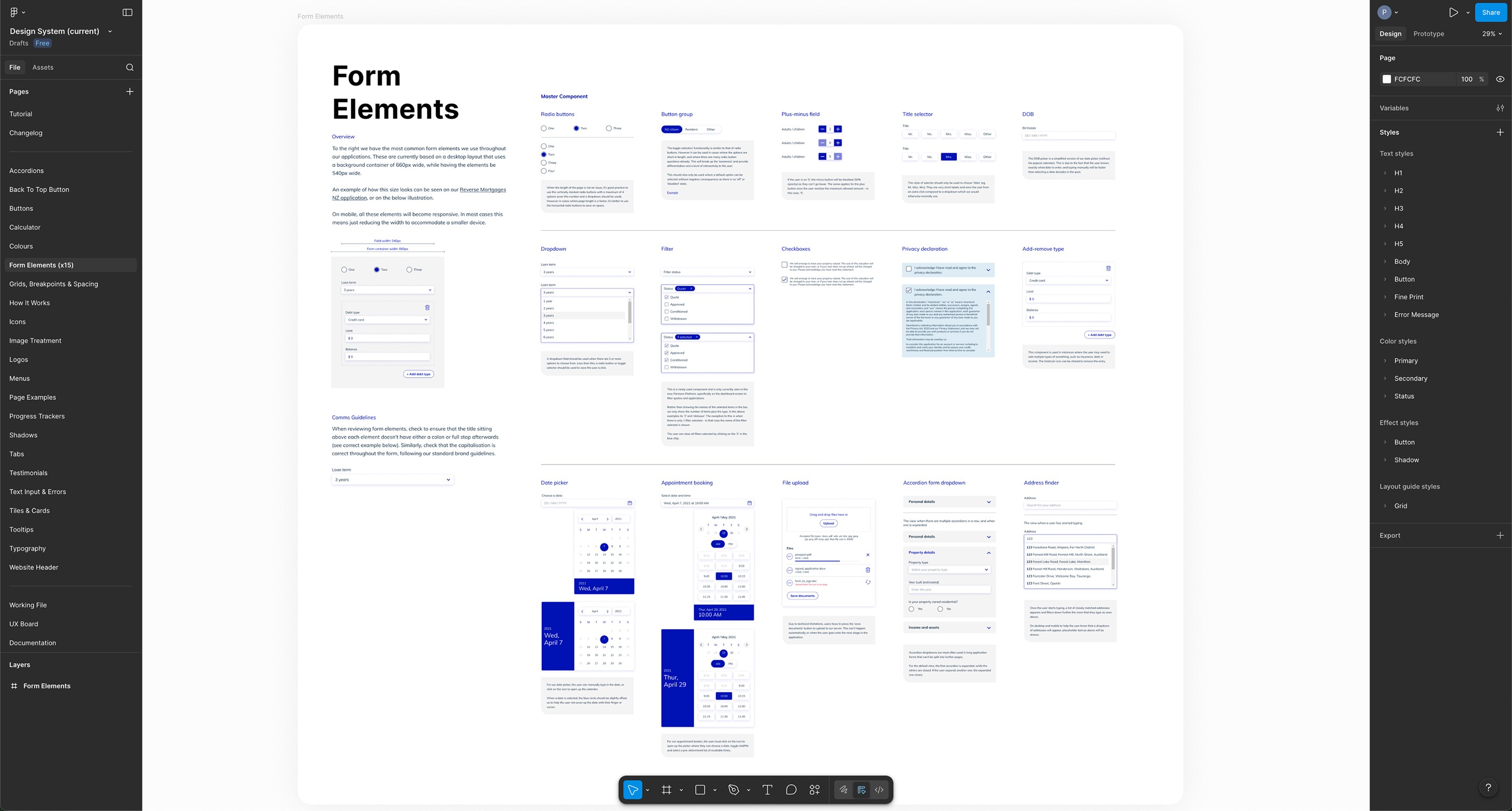
• simplified forms with real-time validation
• clearer explanations of compliance steps
• improved document upload interactions
The result was a flow that felt structured, guided, and significantly less intimidating for new customers.
Impact
After launch, analytics showed measurable improvements:
• onboarding completion time reduced from ~12 minutes to ~6 minutes
• completed registrations increased by 30%
• support requests related to onboarding dropped significantly
• customer satisfaction scores improved in post-onboarding surveys
Users reported feeling more confident that they were completing the process correctly.
Reflection
This project reinforced the importance of communication and structure in complex financial workflows. While regulatory requirements could not be simplified, the way they were presented to users could be.
By focusing on clarity, progress visibility, and reassurance, we transformed a complicated onboarding process into an experience that felt approachable and trustworthy.